IdeKU V3 ASP.NET Core Stabilization
A full-stack ASP.NET Core MVC project stabilizing IdeKU V3 through RBAC hardening, critical bug fixes, new business features, Power BI integration, and performance optimization.
Visual Exhibit
System Blueprint & Verification.
Algorithmic mechanism and measured empirical evidence from the shipped system.
Escalation vectors closed
Query latency optimizations
Executive reports embedded
7 features and 7 query performance fixes deployed to production
Engineering Takeaways
Key Pillars & Findings.
RBAC hardening and critical bug fixing
7 new capabilities for IdeKU V3
7 performance optimizations across database and service layers
Technical Specification & Methodology Notes Expand paper spec
Context
IdeKU V3 is KPC’s internal idea-management platform. During the internship, the platform was already live in production, but it still needed finalization, security hardening, missing feature delivery, analytics integration, and performance improvements before broader use.
Problem
The system had several production-readiness issues: authorization gaps in milestone and workflow editing, anti-forgery token and session refresh problems, AJAX lookup failures, Null Reference Exceptions, submit idea errors, chart rendering issues, missing onboarding features, approval notification gaps, and slow dashboard behavior caused by N+1 queries and over-fetching.
My Role
I worked as a full-stack .NET intern on the existing ASP.NET Core MVC codebase. My work covered controller, service, repository, view, JavaScript, RBAC validation, feature implementation, Power BI integration, and performance tuning.
Evidence
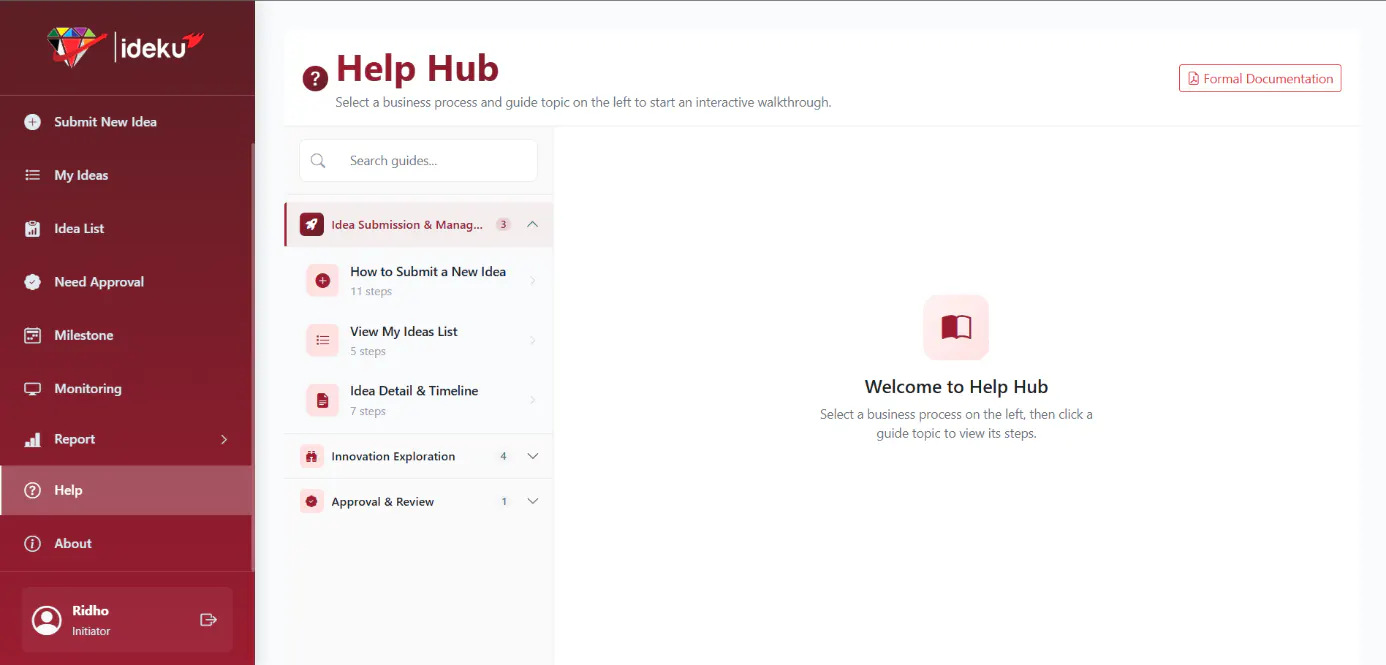
Help Hub grouped user guidance into business-process categories.
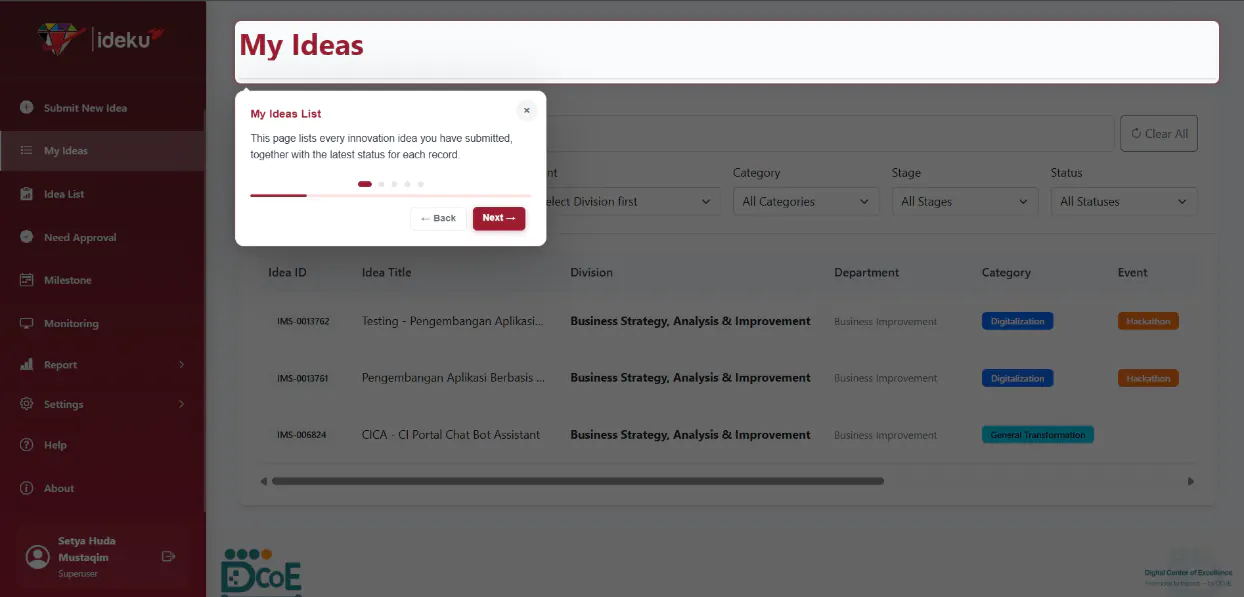
Guided Tour highlighted UI elements with contextual step-by-step guidance.
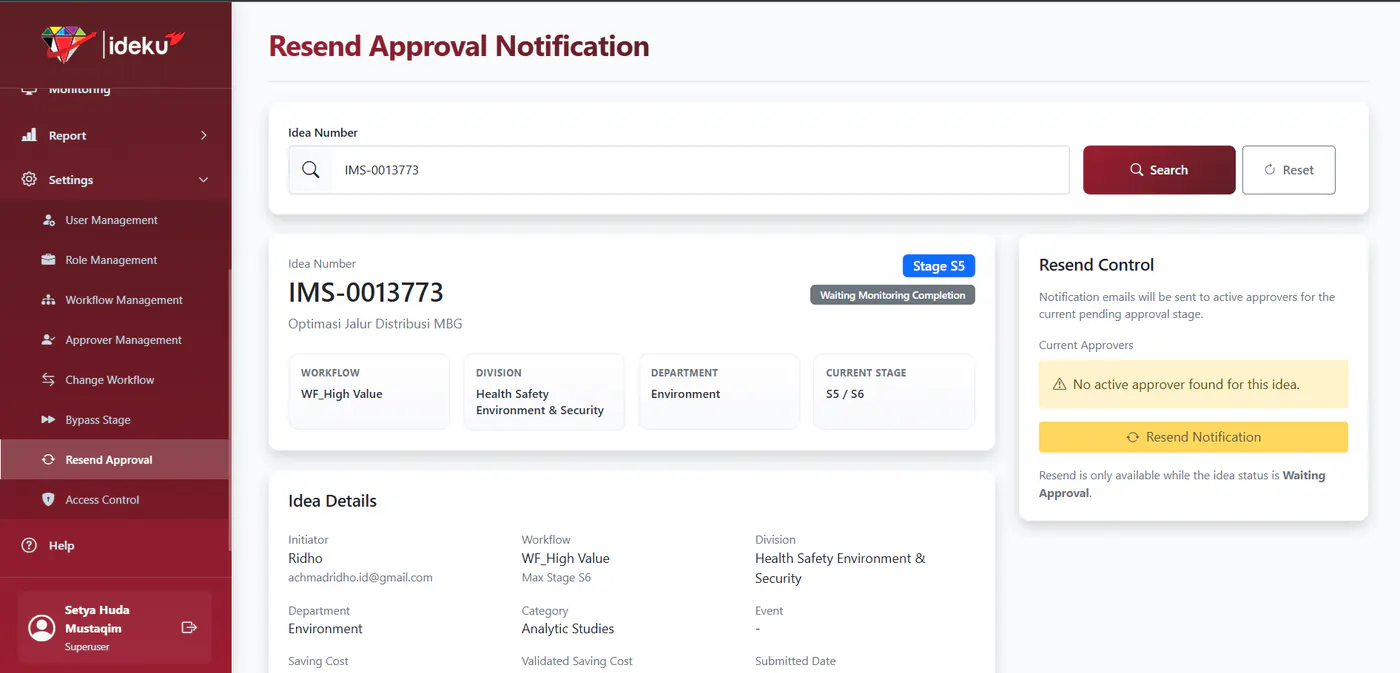
Resend Approval gave users manual control over missed approval notifications.
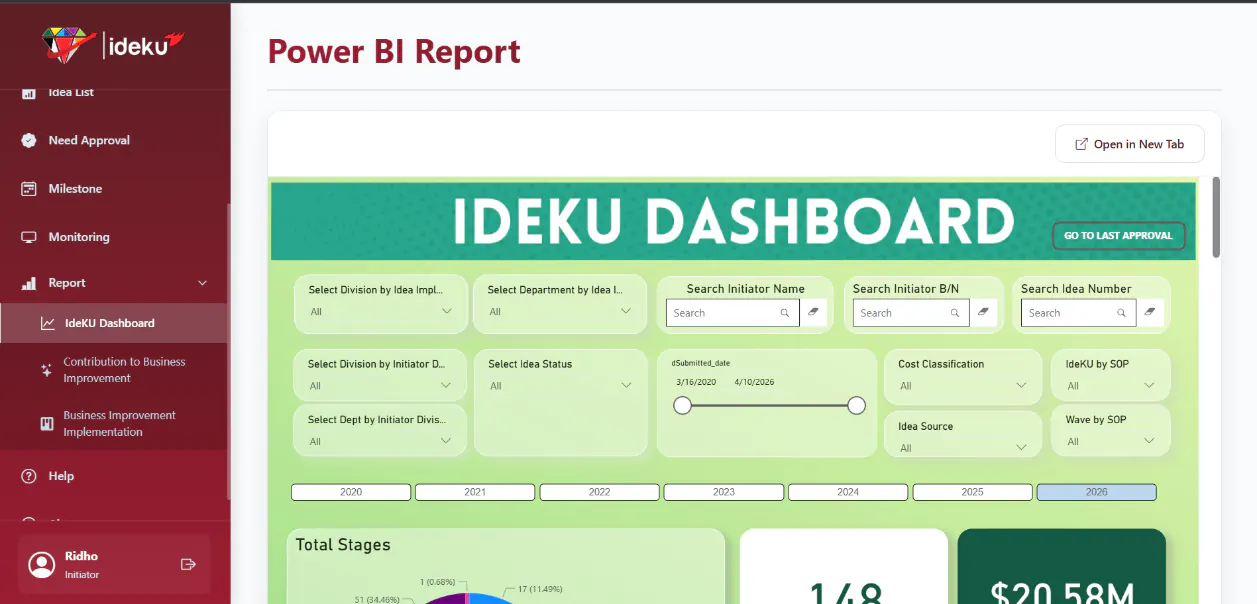
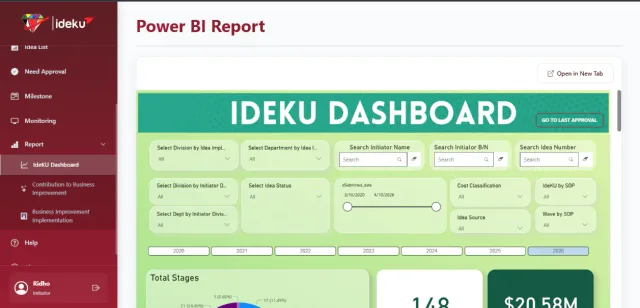
Power BI Embedded added analytics pages directly inside IdeKU V3.
Delivery Signal
The work moved from stabilization into shipped internal features: RBAC fixes, runtime bug fixes, onboarding support, approval controls, Power BI reporting, and a focused performance pass across data access and service layers.
Approach
- Closed authorization-bypass gaps on Edit Milestone and Edit Workflow by tightening role checks and action-level authorization.
- Fixed Set Acting flow issues around anti-forgery token handling, session and claims refresh, and permission cache synchronization.
- Resolved AJAX user lookup failures, Null Reference Exceptions, submit idea errors, state-management inconsistencies, and chart workload issues.
- Implemented Help Hub and Guided Tour with DOM mapping, contextual tooltips, and fallback behavior for empty-data edge cases.
- Added Approval Reminder through a .NET Hosted Service that checks overdue pending approvals and sends reminder notifications.
- Added Resend Approval endpoint behavior, monitoring export to Excel, Mark as Complete control, and dashboard export refinement.
- Integrated Power BI Embedded by adding controller, ViewModel, view, and styling support for IdeKU report pages.
- Optimized performance with database indexing, queryable filtering, lookup caching, capped user lookup, Task.WhenAll parallelization, grouped query refactors, and HashSet lookup.
Key Decisions
The first priority was production stability. Security and runtime issues were handled before feature polish, because IdeKU V3 was already operating in a production environment.
The feature work focused on unblockers for real users: onboarding support through Help Hub and Guided Tour, approval-cycle acceleration through reminders and resend controls, reporting through Power BI, and monitoring workflow completion through Mark as Complete.
Result
The project stabilized IdeKU V3 and cleared production-readiness work. It closed RBAC and authorization gaps, fixed critical application bugs, added seven business capabilities, integrated Power BI reporting, and implemented seven performance optimizations across database and service layers.
The presentation records 31 commits, production readiness cleared, and a one-sprint performance optimization push. The final report concludes that IdeKU V3 operated in a more stable, secure, complete, and scalable condition after the work.
What I’d Improve
I would add unit tests for critical authorization and approval flows, run load testing before full-scale production rollout, document onboarding notes for the next developer, and add structured performance monitoring for dashboard and lookup endpoints.