Scent2Me Perfume Recommendation Platform
A web-based perfume recommendation platform powered by a FastAPI backend, TF-IDF similarity scoring, authentication, wishlist persistence, and split deployment.
Visual Exhibit
System Blueprint & Verification.
Algorithmic mechanism and measured empirical evidence from the shipped system.
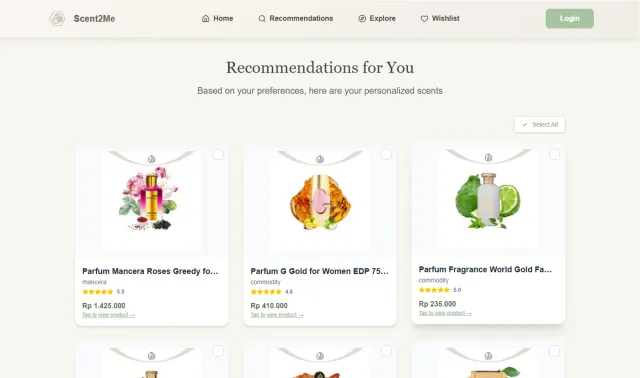
Content based recommendations with live FastAPI backend
Engineering Takeaways
Key Pillars & Findings.
Content-based perfume recommendation engine
FastAPI REST API with auth and wishlist
Vercel frontend connected to Railway backend
Technical Specification & Methodology Notes Expand paper spec
Context
Scent2Me is a group web application that helps users discover perfumes based on scent preferences, gender, time of use, occasion, longevity, favorite notes, and budget. The system combines an interactive Next.js frontend with a FastAPI recommendation backend.
Problem
Perfume discovery is preference-heavy: users often know what kind of scent experience they want, but not the exact product name or brand. The application needed a recommendation flow that could translate structured preferences into relevant perfume options while also supporting search, trending products, authentication, and wishlist persistence.
My Role
I worked as the backend developer and deployment engineer. My main contribution was building the REST API, recommendation logic, authentication and wishlist behavior, backend environment configuration, CORS setup, and Railway deployment.
Evidence
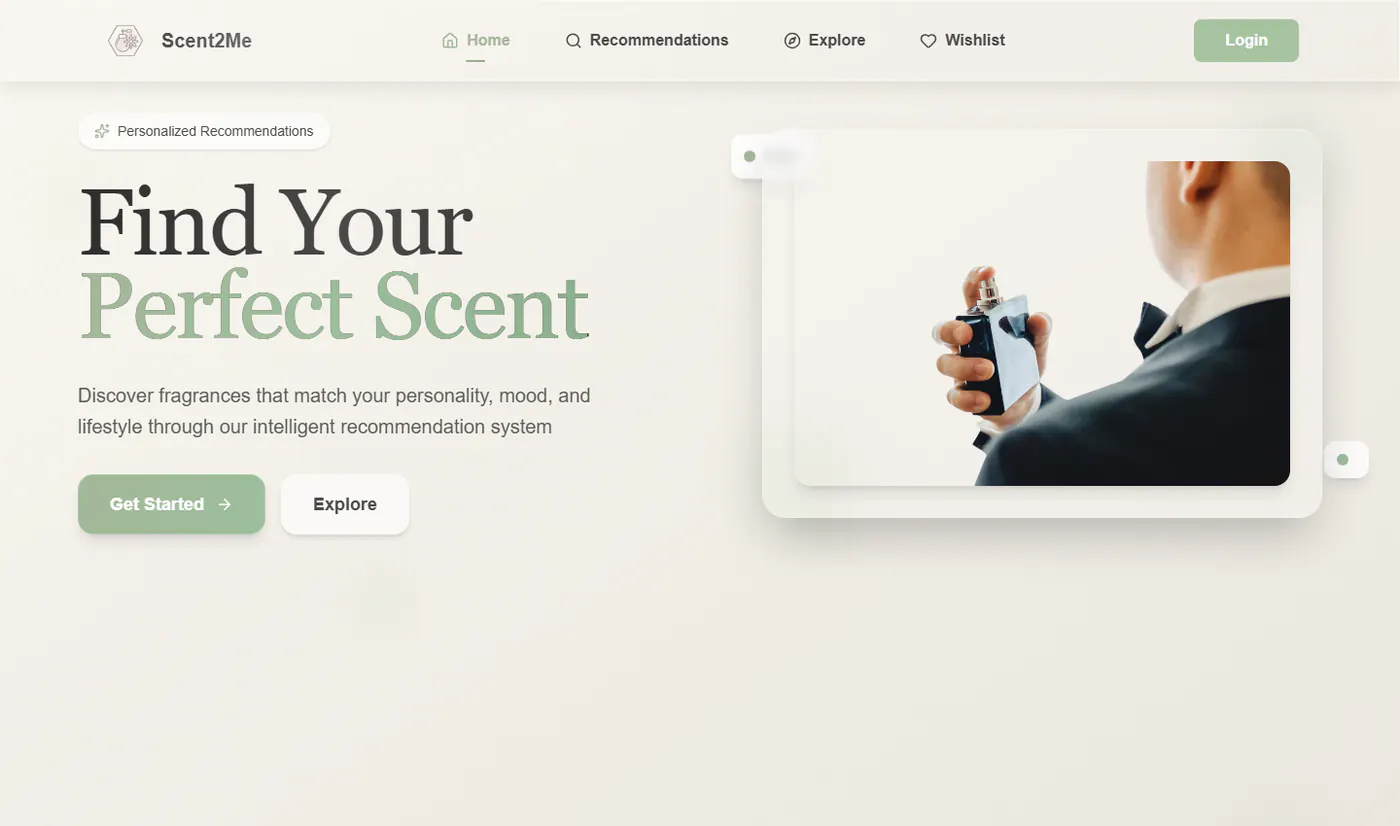
Frontend evidence: Scent2Me homepage deployed on Vercel with recommendation, explore, wishlist, and login navigation.
Approach
- Built a FastAPI service for search, trending products, random products, reference-based recommendations, and preference-based recommendations.
- Implemented content-based recommendation scoring using TF-IDF vectorization and cosine similarity.
- Loaded recommendation artifacts such as
meta.csv,tfidf.pkl, andX_tfidf.npz. - Added filtering based on gender, fragrance family, time of use, occasion, longevity, notes, and price range.
- Implemented simple authentication, password hashing, user storage, and wishlist persistence with SQLAlchemy and PostgreSQL.
- Configured CORS through
ALLOW_ORIGINSso the Vercel frontend could communicate with the Railway backend. - Prepared deployment configuration through environment variables such as
DATABASE_URL,ALLOW_ORIGINS, andART_DIR.
Key Decisions
The application uses split deployment: the frontend runs on Vercel and the backend runs on Railway. This made the UI and recommendation service easier to maintain independently, but required careful CORS and environment-variable configuration.
For recommendations, the backend combines filtering and similarity scoring. Preference filters narrow the candidate set first, then TF-IDF and cosine similarity rank products by relevance to the user’s scent profile.
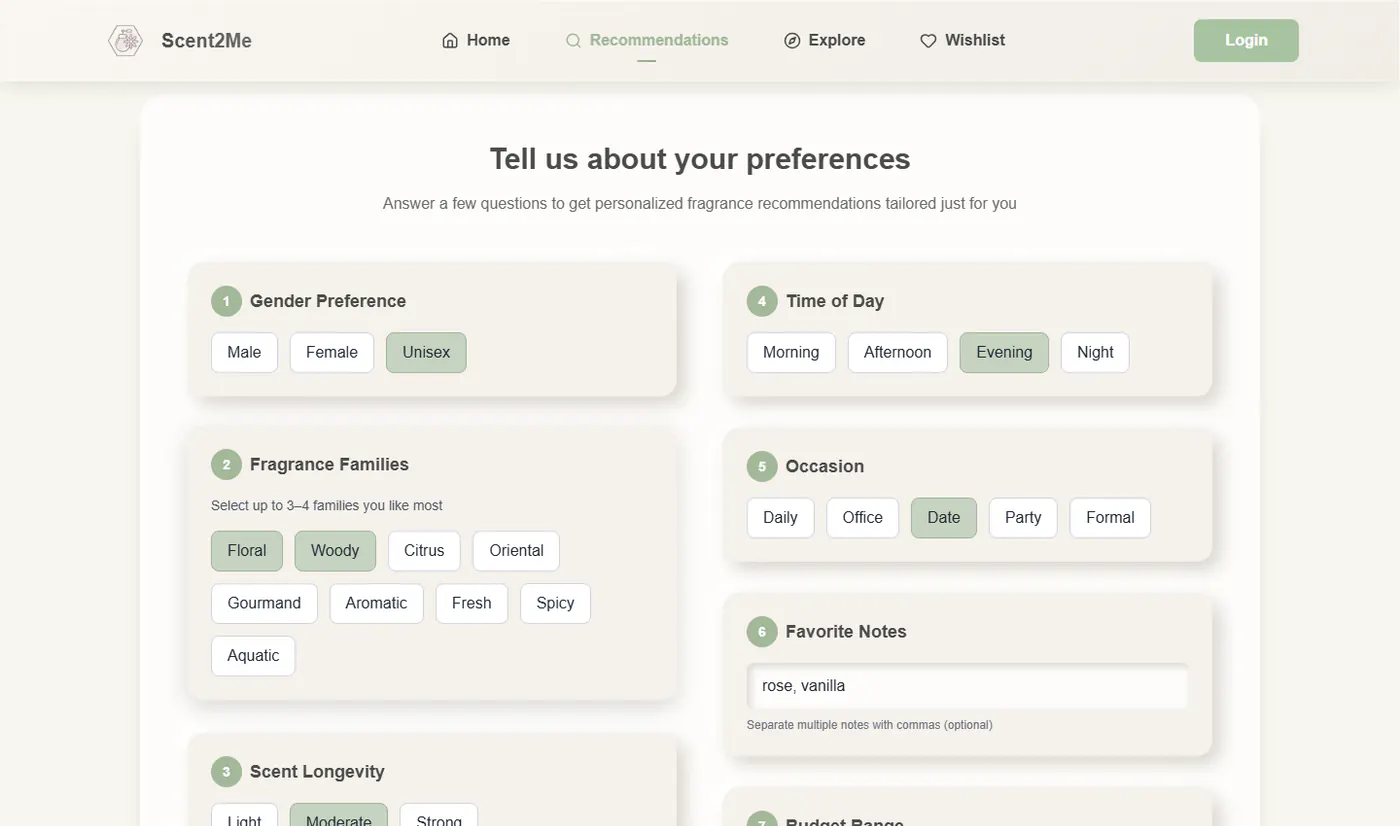
Preference flow: users describe scent family, usage context, performance, notes, and budget before requesting recommendations.
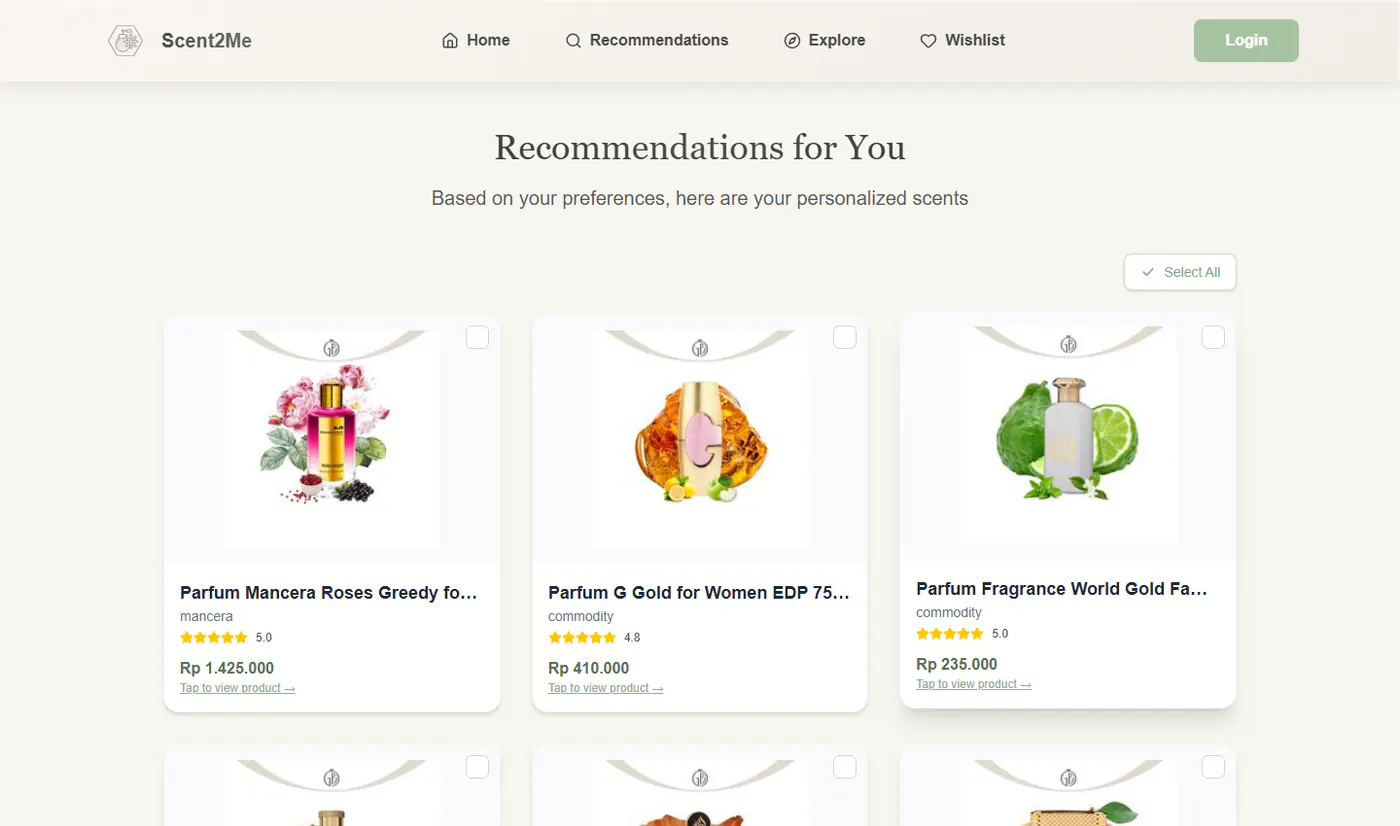
Recommendation output: ranked perfume cards with notes, rating, price, product links, and wishlist-saving behavior.
API Surface
Key backend endpoints included /health, /search, /trending, /random, /brands, /recommend, /recommend/preference, /auth/register, /auth/login, /auth/wishlist/add, /auth/wishlist, and /auth/wishlist/clear.
Result
The project delivered a deployed recommendation platform with a frontend/backend split, a content-based recommendation service, persistent user and wishlist data, and production-oriented backend configuration. My contribution focused on making the recommendation engine usable as an API and deployable as a separate service.
What I’d Improve
I would add automated API tests, monitor recommendation latency after deployment, add structured logging for recommendation requests, improve fallback behavior when filters are too restrictive, and document model artifact regeneration.